
India's clean energy narrative celebrates headline installed renewable capacity figures.
Indian Energy Transition & Geopolitical Vulnerabilities
|
Syllabus: GS Paper III — Energy, Infrastructure, Industrial Growth, Ecosystem Sustainability |
THE CORE PARADOX
India's clean energy narrative celebrates headline installed renewable capacity figures. However, power grids are sustained not by capacity metrics but by actual generation and the structural ability to supply base-load power consistently. This distinction is critical for both policy analysis and examination answers.
KEY STRUCTURAL REALITIES:
- The Base-Load Anchor: Solar and wind energy are hostage to meteorological cycles. Without deep-market battery storage infrastructure, coal remains the primary stabilizing anchor preventing national grid failure.
- Fossil Fuel Decoupling Paradox: Domestic electricity tariffs are closely correlated with global Brent crude price movements despite growing renewables.
- West Asia Shock Channel: ~50% of India's fossil fuel imports transit the Strait of Hormuz. Any conflict escalation directly spikes domestic coal costs, merchant power tariffs, and headline inflation.
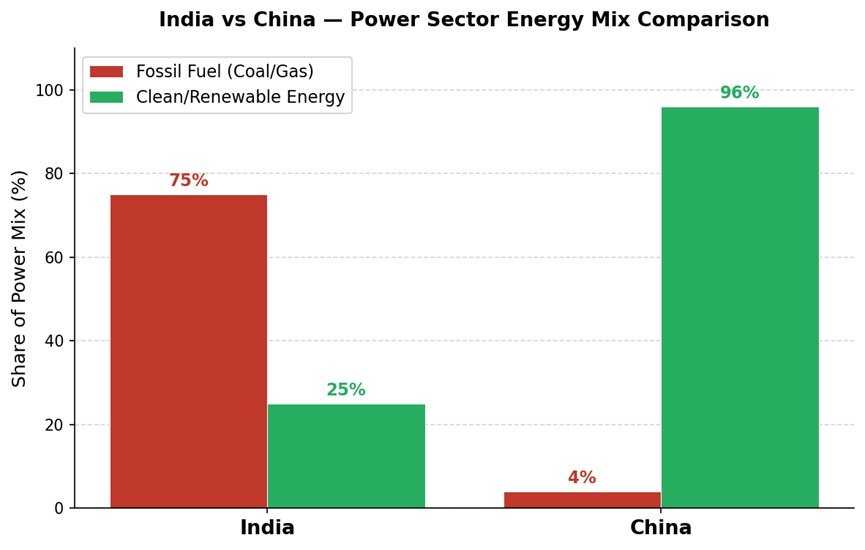
- China Contrast: China has structurally decoupled — oil & gas represent only 4% of its power mix; EV penetration has already cut crude demand by over 1 million barrels per day.
|
Way Forward: Transition policies must move beyond capacity addition to systemic transformation — multi-gigawatt grid-scale storage, smart transmission corridors, and synchronized market pricing mechanisms. |
Uniform Civil Code & Tribal Customary Protections
|
Syllabus: UPSC GS II — Polity, Scheduled Tribes, Executive Frameworks | Judicial Services — Constitutional Law |
- Key Development: Union Govt explicitly confirmed any UCC implementation will categorically exclude Scheduled Tribes (STs).
- Constitutional Balance: Article 44 (DPSP — UCC) must be balanced against Article 244 + Fifth & Sixth Schedules, which protect tribal autonomy, cultural integrity, customary property ownership, and community rights.
- Significance: Demonstrates that DPSP provisions must be read in harmony with fundamental tribal protections — not as absolute mandates overriding special constitutional safeguards.



OTP